What is an LTL accessorial fee, and when can you dispute one?
An LTL accessorial fee is a charge added to the base freight rate for extra services or conditions, such as a liftgate, a residential delivery, a reweigh or a reclass. Each carrier defines these fees in its own rules tariff. You can dispute one when the shipment records do not support it. Federal law gives shippers 180 days from receiving a bill to contest it.
- Each carrier sets its accessorial rules in its own rules tariff, and you can ask for a copy.
- A dispute rests on paperwork: the bill of lading, the delivery receipt and the carrier's weight or inspection record.
- Contest a wrong bill within 180 days of receiving it. FedEx Freight and Estes use the same window.
What is an accessorial fee on an LTL freight bill?
The base rate pays for moving your freight from one dock to another. An LTL accessorial fee is anything the carrier adds for extra work or special conditions at pickup or delivery. Every LTL carrier publishes a rules tariff that says when each fee applies and what it costs.
You have a right to see it. Under 49 U.S.C. 13710, a motor carrier must give the shipper, on request, a copy of the rates, classification, rules and practices behind its charges. Carriers also revise their tariffs during the year, so this guide explains the rules and leaves out the prices.
Which accessorial fees should you check first?
Tarroway checks four fees: liftgate, residential, reweigh and reclass. Here is how two large carriers describe them in their 2026 rules tariffs, and what to look for on your own paperwork.
| Fee | The carrier's rule (2026 tariffs) | What to check |
|---|---|---|
| Liftgate | Paid by whoever requested it (FedEx Freight 890, Estes 567) | A request on the bill of lading, or a signature at delivery |
| Residential | A home, including a business run from a home (FedEx Freight 750-2, Estes 751) | Whether the address is a commercial site |
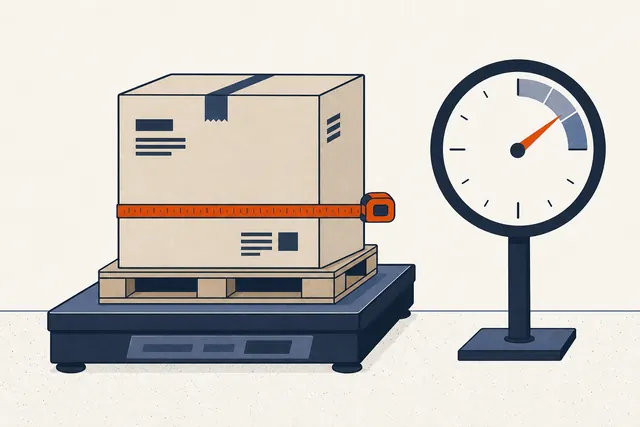
| Reweigh | Rebilled at the new weight, plus a fee above a set difference (FedEx Freight 981) | The carrier's weight record |
| Reclass | Class corrected after inspection, plus an inspection fee (FedEx Freight 981, Estes 993-10) | Your weights and dimensions |
How did the 2025 NMFC changes affect reclass fees?
On July 19, 2025, the National Motor Freight Traffic Association (NMFTA) put Docket 2025-1 into effect. NMFTA's help center explains that density became the primary factor in classifying freight, on a scale of 13 density steps. Items with handling, stowability or liability concerns are still not rated on density alone.
For shippers, this puts more weight on accurate weights and dimensions. If the carrier's scale or dimensioner reads different numbers from your bill of lading, the class can change, and a reclass fee can follow. You can check your class before you ship with our free freight class calculator.
How do you dispute a wrong accessorial charge?
- Collect the paperwork. The bill of lading, the delivery receipt, the invoice, and any weight or inspection record.
- Compare each fee to the carrier's rule. Use the current rules tariff, and ask the carrier for a copy if you need one.
- Contest it in writing, on time. Under 49 U.S.C. 13710, a shipper must contest a bill within 180 days of receiving it. FedEx Freight and Estes both set 180 days in their own rules.
- Keep the carrier's answer. Federal rules (49 CFR Part 378) require the carrier to acknowledge a written overcharge claim within 30 days and to pay, decline or settle it within 60 days, with its reasons if it declines.
Separate from these windows, 49 U.S.C. 14705 gives 18 months to start a court action over overcharges, counted from delivery. Which limit applies to your case is a legal question, so ask a freight claims professional or a lawyer well before a deadline.
Where a service helps, and where it does not
You can do all of this yourself with the tariff, your paperwork and a calendar. It takes time on every invoice, and that is where Tarroway helps: we check your liftgate, residential, reweigh and reclass charges and send a findings report within 48 hours. You can start with a free fee audit. We cannot reverse a fee that your paperwork supports, and we do not handle rate audits, routing or cargo claims.
Where this goes wrong
| The problem | What it costs you | The fix |
|---|---|---|
| Missing the 180-day window | The right to contest the charge | Check invoices every month, not once a year |
| No weight or inspection record | A reweigh or reclass you cannot challenge | Ask the carrier for the record before paying |
| Short-paying to offset a claim | A past-due balance with the carrier | Pay on terms and file the claim in writing |
Every fact in this guide comes from the carriers' own 2026 rules tariffs and the federal rules below, each checked on September 25, 2026.
- NMFTA: NMFC changes under Docket 2025-1 took effect July 19, 2025
- NMFTA Help Center: NMFC classification FAQs (archived copy)
- FedEx Freight 100-Y Rules Tariff, effective January 5, 2026 (PDF)
- FedEx Freight: dispute a charge or invoice
- Estes EXLA 105 Rules and Regulations, effective January 2, 2026 (PDF)
- Estes: freight shipping FAQs
- 49 U.S.C. 13710: billing and collecting practices (Cornell LII)
- 49 U.S.C. 14705: limitation on actions (Cornell LII)
- 49 CFR Part 378: processing of overcharge claims (eCFR)
First published September 2026. Checked in September 2026. If something here is out of date, tell us and we will fix it.